Buying Dancong Tea for the first time can be confusing.
With so many different varieties, aroma profiles, prices, and descriptions available, it can be difficult to know whether you’re buying a genuinely high-quality tea or simply paying more for attractive packaging.
The good news is that you don’t need to be a professional tea master to recognize good Dancong Tea.
By learning how to look at the dry leaves, smell the tea, evaluate the brewed liquor, and observe how the flavor develops through multiple infusions, you can make much more confident choices.
In this guide, we’ll explain 8 important things to look for when choosing high-quality Dancong Tea, especially if you’re buying Phoenix Dancong for Gongfu tea brewing.
1. Start With the Origin
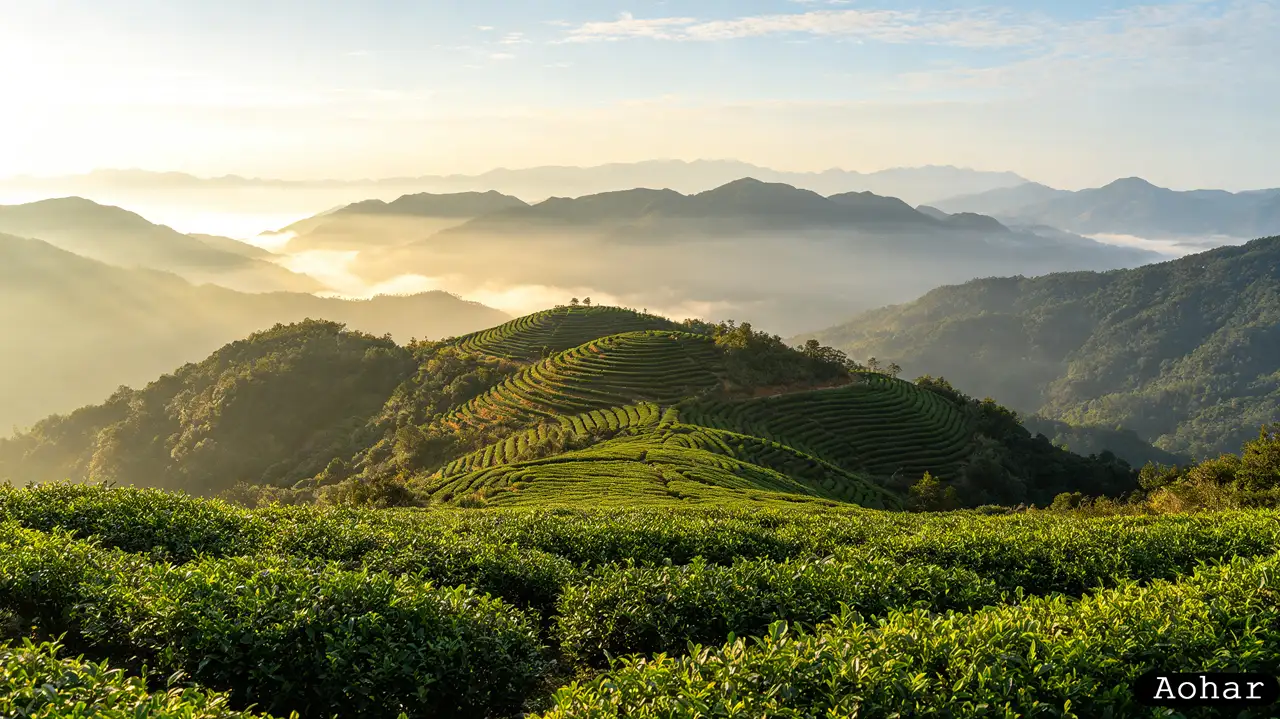
One of the first things to consider when buying Dancong Tea is where the tea comes from.
Authentic Phoenix Dancong is traditionally associated with the Phoenix Mountain area of Chaozhou, Guangdong, China.
The region’s mountain environment, climate, soil, and long-standing tea-making traditions all contribute to the distinctive character of Phoenix Dancong.
This is why the term Phoenix Dancong is important when you’re looking for authentic Dancong Tea.
A product simply labeled “Oolong Tea” doesn’t tell you enough about its origin or style.
If you’re specifically looking for Dancong, check whether the product clearly identifies its origin and tea type.
2. Look at the Dry Tea Leaves
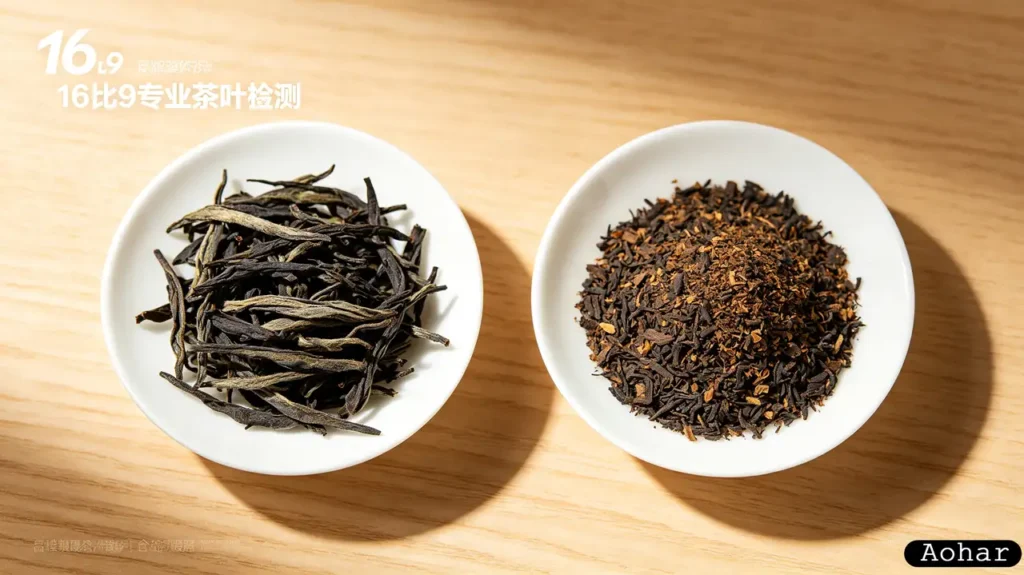
The appearance of dry tea leaves can tell you a lot about the quality and processing of Dancong Tea.
High-quality Phoenix Dancong is generally made from carefully processed whole leaves rather than excessive amounts of broken tea and dust.
Look for leaves that have:
- A relatively consistent appearance
- A natural twisted shape
- Good structural integrity
- Clean surfaces
- No excessive powder or debris
The exact color can vary depending on the variety and roasting style, so don’t assume that darker leaves automatically mean better tea.
Instead, look for clean, well-processed leaves with a natural appearance.
3. Smell the Dry Leaves
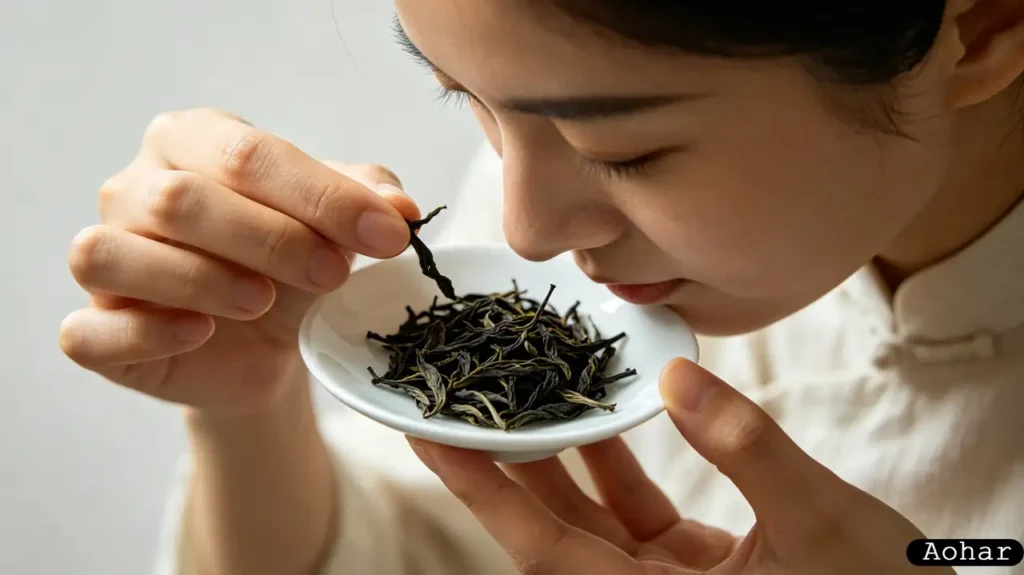
Aroma is one of the most important characteristics of Dancong Tea.
Before brewing, take a moment to smell the dry leaves.
High-quality Dancong often has a clear and distinctive fragrance rather than a flat or dusty smell.
Depending on the variety, you may notice floral, fruity, honey-like, nutty, or other naturally aromatic notes.
For example, Mi Lan Xiang (Honey Orchid) is known for its characteristic sweet and floral fragrance.
The aroma should feel clean and expressive rather than artificial or overpowering.
If a tea smells strongly perfumed in an unnatural way, that’s a reason to be cautious.
4. Pay Attention to the Tea Liquor
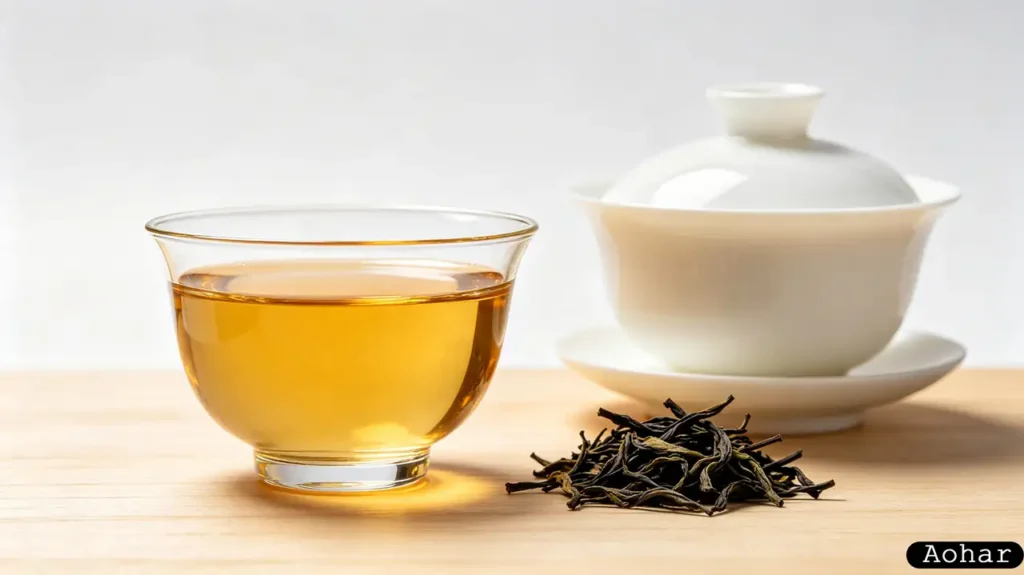
After brewing, look at the tea liquor.
A good Dancong Tea should produce a clear and attractive infusion appropriate to its processing style.
Instead of judging the tea only by how dark or light the liquor appears, pay attention to:
- Clarity
- Brightness
- Clean appearance
- Aroma rising from the cup
- How the color changes through different infusions
Color alone cannot determine tea quality.
A lighter-colored tea can be excellent, while a darker tea isn’t automatically superior.
The overall combination of aroma, taste, mouthfeel, and aftertaste is much more important.
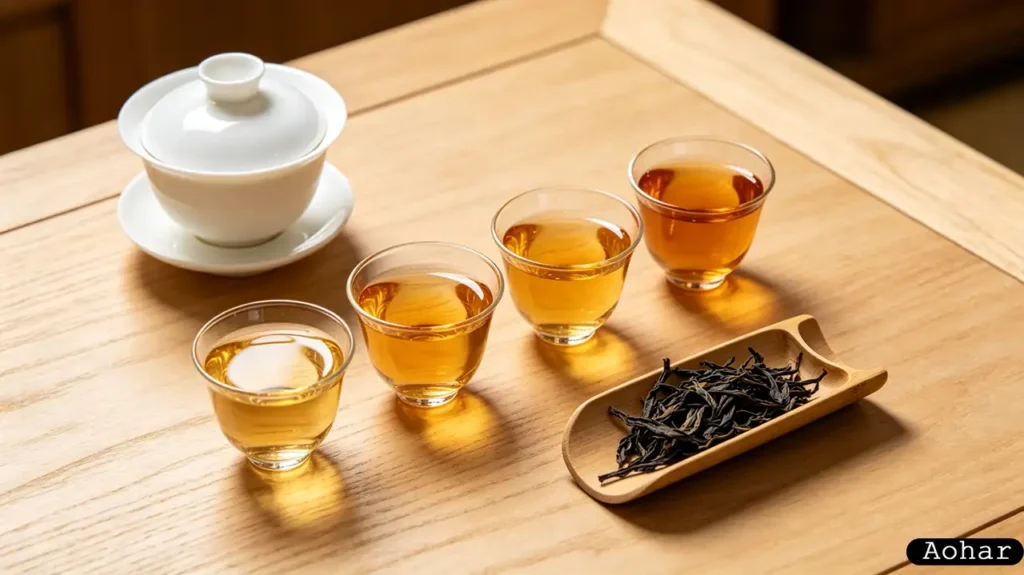
5. Taste the Tea Through Multiple Infusions
One of the best ways to evaluate Dancong Tea is to brew it more than once.
Don’t judge a tea after the first sip.
High-quality Dancong can develop significantly during a Gongfu tea session.
You may notice:
First infusion:
A fresh and aromatic opening.
Second and third infusions:
More depth and clearer flavor characteristics.
Later infusions:
A softer but still recognizable aroma and lingering aftertaste.
The exact number of infusions depends on the tea, brewing parameters, and personal preference.
What matters is whether the tea continues to offer an interesting experience instead of quickly becoming flat and watery.
6. Pay Attention to Mouthfeel and Aftertaste
Aroma gets a lot of attention, but mouthfeel is equally important.
When tasting Dancong Tea, notice how the tea feels in your mouth.
Does it feel:
- Smooth?
- Clean?
- Dry?
- Thin?
- Full-bodied?
- Refreshing?
- Lingering?
You should also pay attention to the aftertaste.
A tea with a pleasant lingering finish can remain interesting even after you swallow.
This is one reason experienced tea drinkers often spend more time noticing what happens after the sip rather than simply focusing on the first flavor.
7. Don’t Choose Dancong Tea Based Only on Price
Price is one of the easiest things to compare—but it isn’t a complete measure of quality.
A more expensive Dancong Tea isn’t automatically better for everyone.
Price can be influenced by factors such as:
- Tea garden location
- Tree age
- Harvest quality
- Processing
- Aroma profile
- Production volume
- Craftsmanship
- Storage
- Packaging
Instead of asking:
“What’s the most expensive Dancong Tea?”
A better question is:
“Which Dancong Tea offers the aroma and flavor profile I enjoy?”
For beginners, choosing a well-described tea with a recognizable aroma profile can be more useful than immediately buying the most expensive option.
8. Choose the Right Aroma Profile for Your Taste
Dancong is especially interesting because different varieties can have very different aromatic personalities.
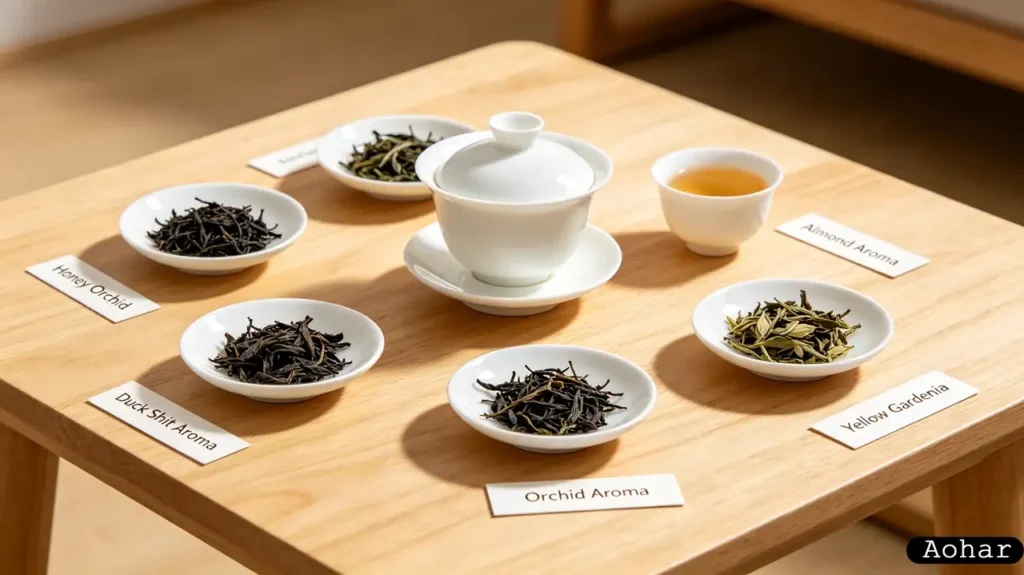
Some popular styles include:
Mi Lan Xiang — Honey Orchid
Known for its sweet, floral and honey-like character, Mi Lan Xiang is one of the easiest Dancong styles for beginners to explore.
Ya Shi Xiang — Duck Shit Aroma
Despite its unusual English name, Ya Shi Xiang is highly appreciated by experienced Dancong drinkers for its distinctive floral, mineral, and complex aromatic character.
Xing Ren Xiang — Almond Aroma
This style is associated with an almond-like aromatic profile and offers a different experience from more obviously floral Dancong varieties.
Zhi Lan Xiang — Orchid Aroma
Orchid-like fragrance is the defining characteristic associated with this style.
Huang Zhi Xiang
Another aromatic Phoenix Dancong style appreciated for its distinctive fragrance and layered character.
The important point is that there isn’t one single “best” Dancong Tea for everyone.
The best choice depends on your personal taste.
How Should Beginners Choose Dancong Tea?
If you’re buying Dancong Tea for the first time, don’t make the decision unnecessarily complicated.
A simple approach is:
Step 1: Choose authentic Phoenix Dancong.
Step 2: Start with a recognizable aroma profile such as Mi Lan Xiang.
Step 3: Choose loose-leaf tea rather than tea bags.
Step 4: Buy enough tea to brew several sessions.
Step 5: Use a gaiwan or small Gongfu teapot.
Step 6: Compare the aroma, flavor, mouthfeel, and aftertaste.
Once you understand what you enjoy, you can explore more distinctive Dancong varieties.
Why Gongfu Brewing Is Ideal for Dancong Tea
If you want to understand the quality of a Dancong Tea, Gongfu brewing is one of the best ways to experience it.
Compared with making a large pot of tea, Gongfu brewing uses a relatively small amount of water and allows you to taste the tea through multiple short infusions.
This makes it easier to observe:
- Aroma development
- Flavor changes
- Mouthfeel
- Aftertaste
- Brewing endurance
A simple porcelain gaiwan is an excellent starting point.
You don’t necessarily need an elaborate tea setup. The quality of the tea, water, brewing technique, and your attention all play important roles.
AOHAR’s Approach to Dancong Tea
At AOHAR, our focus is on Chaozhou Gongfu Tea and the traditional tea culture of Chaoshan.
For tea lovers who want to explore Phoenix Dancong, our selection includes Dancong tea suitable for Gongfu brewing, along with traditional teaware and tea-making accessories.
AOHAR currently features products including Old Bush Honey Orchid Phoenix Dancong Tea, as well as traditional teapots, tea sets, and tea stoves designed around the Gongfu tea experience.
The goal isn’t simply to sell tea.
It’s to help tea drinkers discover the aroma, brewing process, and quiet ritual that make Chaozhou Gongfu Tea so special.
Final Thoughts
Choosing high-quality Dancong Tea becomes much easier once you know what to look for.
Don’t judge a tea by packaging or price alone.
Instead, consider:
- Origin
- Dry leaf appearance
- Aroma
- Tea liquor
- Flavor
- Mouthfeel
- Aftertaste
- Performance through multiple infusions
Most importantly, give yourself time to taste different varieties.
Dancong Tea is not about finding one tea that everyone agrees is the best.
It’s about discovering the aroma and character that you personally enjoy.
If you’re beginning your Dancong journey, start with one approachable variety, brew it Gongfu style, and pay attention to how the tea changes from one infusion to the next.
That is where the real experience begins.
FAQ
What is the best Dancong Tea for beginners?
Mi Lan Xiang, also known as Honey Orchid Dancong, can be a good starting point for beginners because its recognizable floral and sweet aromatic profile is relatively easy to appreciate.
How can you tell if Dancong Tea is high quality?
Look at the origin, dry leaf appearance, aroma, tea liquor, flavor, mouthfeel, aftertaste, and how the tea develops across multiple infusions. No single characteristic determines quality.
Should Dancong Tea have a strong aroma?
High-quality Dancong is known for its distinctive fragrance, but a strong aroma does not automatically mean better quality. The aroma should be clean, natural, and well integrated with the tea’s flavor.
Is expensive Dancong Tea always better?
No. Price can reflect factors such as origin, tree age, harvest, processing, and production volume, but personal taste is still the most important factor when choosing tea.
How should beginners brew Dancong Tea?
Gongfu brewing with a small gaiwan or teapot is an excellent way to explore Dancong because short infusions allow you to observe how the aroma and flavor develop over multiple brews.
How many times can Dancong Tea be infused?
The number of infusions varies depending on the tea, leaf quantity, water temperature, brewing time, and personal preference. Good Dancong can remain interesting across multiple infusions.